Key Takeaways
- Understand the importance of tracking SEO performance to guide and improve strategy.
- Learn core metrics that reveal the effectiveness of your SEO efforts.
- Explore essential platforms and tools that simplify the monitoring process.
- See how to analyze and interpret SEO metrics for actionable insights.
Table of Contents
- Importance of Tracking SEO Performance
- Key Metrics to Monitor
- Tools for Tracking SEO Progress
- Analyzing and Interpreting SEO Data
- Common Challenges and Solutions
- Best Practices for Effective SEO Tracking
- Conclusion
In the fast-changing world of digital marketing, keeping a close eye on your website’s SEO progress is vital for business growth. Without clear, data-driven insights, you risk wasting resources on ineffective strategies and missing critical opportunities for improvement. Leveraging advanced tools, like a keyword rank checker tool from Vazoola, can streamline this process. Vazoola stands out as a trusted authority in SEO and digital marketing, offering robust solutions to monitor keyword rankings across local and national campaigns. Their tool offers real-time ranking data and detailed performance insights, making it indispensable for brands eager to enhance and sustain search visibility in competitive markets.
Tracking SEO progress isn’t just about watching for increases in website visits. Reliable data allows you to understand which tactics drive measurable outcomes, such as growth in organic traffic, improved keyword rankings, or higher conversion rates. Using an accurate reporting tool, you gain a transparent view of progress and can adjust your SEO efforts to align with your goals.
Importance of Tracking SEO Performance
SEO performance measurement is integral to online success. Routine monitoring reveals whether your strategies are effectively driving organic growth, increasing visibility, and supporting your business objectives. By assessing accurate data points, you can identify strengths to double down on and weaknesses needing improvement. Brands that prioritize regular checking are more likely to notice shifts, both positive and negative, in their SEO journey and can make timely, informed adjustments. Moreover, performance tracking outlines your ROI, clarifying how much value your SEO investments are generating. This layer of transparency guides your future marketing spend and signals when it’s time to pivot.


Key Metrics to Monitor
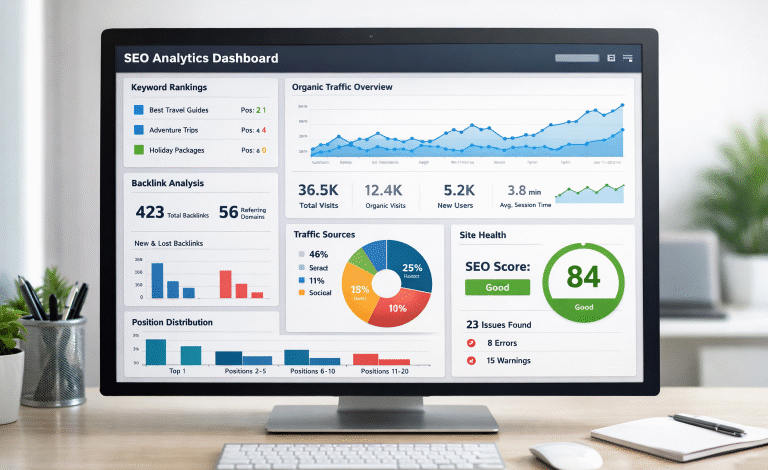
Understanding the most impactful metrics is crucial for measuring SEO progress. By focusing on actionable data, teams can avoid “vanity metrics” and prioritize results that matter. Here are some core metrics to monitor:
- Organic Search Traffic: The total number of visitors landing on your site through unpaid search results. This signifies how well your content ranks and is being discovered.
- Keyword Rankings: The specific positions your targeted keywords hold in search engine results. Monitoring these trends helps pinpoint what’s resonating with your audience.
- Click-Through Rate (CTR): The percentage of people who click your website after seeing it in the search listings. This metric assesses how compelling your titles and meta descriptions are.
- Conversion Rate: The share of site visitors who take a desired action, such as making a purchase or subscribing to a newsletter. This is the bottom-line validation of your optimization work.
- Backlink Profile: The number and quality of inbound links from external domains. This affects your authority and your potential ranking.
Tools for Tracking SEO Progress
Effective SEO tracking relies on robust platforms that deliver accurate, actionable data. Key tools in this area include:
- Google Analytics: Offers detailed insights into user behavior and site performance metrics. Easily track traffic, segment audiences, and measure conversion goals.
- Google Search Console: Essential for understanding how Google views your website. Review keyword impressions, click data, and indexing issues.
- Ahrefs: Renowned for its comprehensive backlink database, keyword research, and robust site audit features. Particularly useful for competitive analysis.
- SE Ranking: Delivers accurate keyword tracking, website audits, and competitive intelligence, making it suitable for businesses of all sizes.
- Moz Pro: Popular for user-friendly dashboards and rich data sets for keyword research and link building.
Choosing the right mix of these tools can ensure your reporting is broad, deep, and accurate, covering every aspect of your SEO strategy.
Analyzing and Interpreting SEO Data
Gathering SEO metrics is only the first step; true progress depends on your ability to interpret and act on the data. Look for consistent patterns over time rather than focusing solely on week-to-week fluctuations. A steady rise in organic traffic or a gradual increase in top-ranking keywords suggests your optimizations are taking effect.
A sharp decline in rankings, lower CTRs, or reduced conversion rates may signal technical issues, poorly aligned content, or the impact of a recent search engine algorithm update. Compare current data with historical baselines to detect anomalies. Use these insights to revise your content, optimize technical SEO, and refocus your outreach and link-building efforts.
Common Challenges and Solutions
SEO tracking is not without hurdles. One common issue is data overload: dashboards can get cluttered with superfluous metrics, making it hard to focus on what matters. Combat this by customizing reports to display only essential KPIs aligned with business goals. Another challenge is reacting too quickly to ranking fluctuations, which may be temporary. It’s vital to look at longer-term trends before making significant changes.
- Stay Focused: Regularly review and refine your key performance indicators to match current goals.
- Maintain Consistency: Scheduled, repeatable reporting helps eliminate the noise and highlights genuine trends.
- Monitor Search Updates: Keep up with major search algorithm changes that can affect rankings and organic visibility.
Best Practices for Effective SEO Tracking
For a structured, reliable approach to tracking SEO:
- Set Clear Goals: Define what success looks like based on your organization’s unique objectives, whether it’s growth in organic leads, sales, or brand reach.
- Leverage Multiple Tools: Combine trusted platforms for keyword, traffic, and backlink tracking to create a full performance picture.
- Personalize Reporting: Customize reports for different stakeholders (executives may want high-level overviews, while SEO managers benefit from granular data).
- Update Strategies Regularly: Allow insights and patterns from tracking to drive ongoing optimization decisions. Be prepared to pivot as needed to keep moving forward.
Conclusion
Consistently tracking your SEO progress with reliable data is essential for sustaining strong search visibility and business growth. By focusing on the right metrics, leveraging best-in-class tools like Vazoola’s keyword rank checker tool, and continually optimizing based on actionable insights, your website can achieve and maintain top performance. Remember, the digital landscape is always shifting, so ongoing monitoring and adaptation are the keys to staying ahead of the competition and capturing more qualified leads from search engines.