Driving in Dubai is usually smooth and well-organized, but it’s also highly monitored. Cameras, smart patrols, and strict lane discipline mean that many visitors (and even residents) collect fines simply by driving the way they would at home. If you’re renting a higher-performance SUV or a premium car for comfort—such as Porsche Cayenne Rental Dubai—it’s even more important to understand how enforcement works, because speed builds quickly on wide roads and fines can arrive before you feel like you were “driving fast.”
This guide on Understanding Dubai’s Traffic Fines: How They Happen and How to Prevent Them breaks down the most common fine triggers, the real-world situations that cause them, and simple habits that dramatically reduce your risk.
Understanding Dubai’s Traffic Fines: How the System Works (Cameras, Black Points, and Rentals)
Dubai’s traffic enforcement system is designed for consistency: clear rules, high compliance, and fast detection. The most important thing to know is that fines aren’t only issued by an officer pulling you over. Many violations are captured automatically using fixed speed radars, lane and junction cameras, AI-enabled smart systems, and mobile patrol monitoring. That’s why drivers often say, “I didn’t see anyone,” and still receive a fine—because the “observer” was an automated camera array rather than a person.


Dubai (and the wider UAE) also uses black points for certain serious violations. Think of black points as a safety score that accumulates when you commit high-risk infractions (for example, dangerous driving behaviors). A widely cited rule in the UAE is that reaching 24 black points can trigger license suspension (and some violations can also lead to vehicle impound). The practical takeaway is that Dubai traffic fines aren’t just about cost; they can affect your ability to drive and your travel plans if the violation is severe.
If you’re in a rental car, the workflow is typically straightforward: the fine is issued to the vehicle, the rental company receives the notice, and then it’s passed to the renter according to the rental agreement—often with an added administration fee. This is why “I’ll just sort it out later” can become expensive: tolls, fines, and admin fees can stack up quietly if you’re not careful.
Quote to remember: “In Dubai, assume every major road is monitored—because most of them are.”
Understanding Dubai’s Traffic Fines: The Most Common Ways They Happen
Below are the most common Dubai traffic fines and the everyday driving moments that cause them. The goal isn’t to scare you—it’s to help you recognize the patterns so you can avoid them effortlessly.
Understanding Dubai’s Traffic Fines for Speeding: Why It Happens So Easily
Speeding is the #1 fine category for many drivers because Dubai roads are wide, smooth, and designed for flow. You may feel “stable” at higher speeds, especially in quiet traffic, and many vehicles reach extra speed with very little engine noise. Another common issue is changing speed limits: a road may transition between different limits across segments, ramps, or parallel service roads, and drivers who aren’t watching signs can drift into a fine zone.
Common speeding fine triggers include:
- Following traffic pace without checking posted limits
- Missing a speed reduction near exits, interchanges, or built-up zones
- Confusing a main highway with a parallel service road (often lower limit)
- Accelerating downhill toward radar-covered stretches
Practical prevention: use cruise control where appropriate, and make “speed sign checks” a habit after every interchange.
Understanding Dubai’s Traffic Fines for Lane Discipline, Tailgating, and Unsafe Overtakes
Dubai’s highways depend on lane discipline. Two behaviors often lead to fines and close calls: tailgating and erratic lane changes. Tailgating is particularly risky because drivers sometimes underestimate how quickly traffic can compress in fast lanes. Unsafe weaving can also attract attention from patrols and smart monitoring.
High-risk behaviors to avoid:
- Following too closely at high speed (insufficient stopping distance)
- Sudden multi-lane cuts to “make an exit”
- Overtaking from the right when traffic is flowing
- Blocking faster traffic in the leftmost lane (even if you’re at the limit)
Simple rule that works: keep a generous gap and plan exits early. In Dubai, late exit moves are one of the easiest ways to create a violation—or a dangerous moment.
Understanding Dubai’s Traffic Fines at Traffic Lights and Junctions
Red-light and junction violations are treated seriously because they directly relate to collision risk. A common mistake is “pushing the yellow” when you’re unfamiliar with timing or you’re following a vehicle closely. Another frequent issue is entering a junction when traffic ahead is stopped, which can lead to blocking the intersection.
Common junction-related fine triggers:
- Crossing after the light has turned red (even by a small margin)
- Making a prohibited turn or U-turn
- Blocking an intersection because the exit lane was not clear
- Ignoring lane arrows (straight-only vs turn lanes)
Practical prevention: if you can’t clear the intersection, don’t enter—no matter how much the car behind you pressures you.
Understanding Dubai’s Traffic Fines for Mobile Phone Use, Seat Belts, and Child Safety
Dubai enforces occupant safety and distraction laws tightly. Mobile phone use while driving is a consistent fine generator, especially for drivers who glance down at navigation or messages. Seat belt compliance is another area where visitors sometimes slip, especially in the back seat.
Safety-related fine triggers to watch:
- Holding or using a phone while driving (even at a stop)
- Not wearing a seat belt (front and back occupants)
- Children not secured properly in age-appropriate restraints
- Kids in risky seating positions (e.g., front seat when they shouldn’t be)
Fact (widely communicated in the UAE): children under 4 must be secured in an appropriate child seat, and front-seat restrictions apply for younger/shorter children (commonly cited as under 10 years or under 145 cm). If you’re traveling with family, plan child seats in advance rather than “improvising” on arrival.
Understanding Dubai’s Traffic Fines for Parking, Bus Lanes, and Roadside Violations
Some of the most frustrating fines happen at low speed: parking mistakes, stopping in restricted areas, or drifting into monitored lanes. Tourists often get caught in busy districts because they stop “just for a minute” to pick someone up or they park where signage isn’t obvious.
Common non-moving fine triggers:
- Parking in no-parking zones or blocking access points
- Stopping on the hard shoulder without a valid emergency
- Using restricted lanes (such as bus-only segments where enforced)
- Parking meter errors or exceeding paid time in monitored areas
Practical prevention: when in doubt, move to a legal lot. The time you “save” with a risky stop is rarely worth the fine.
See also: Introduction To Business And Management
Understanding Dubai’s Traffic Fines: A Simple “Risk Map” Chart (Where People Get Caught)
Use this quick text chart to anticipate where attention should be highest:
Fine Risk by Situation (Low → High)
- Residential streets at low speed: Low–Medium
- Mall parking areas and drop-off zones: Medium
- Major city arterials with frequent cameras: Medium–High
- Highway interchanges/exits (rapid limit changes): High
- School zones / construction zones (strict reductions): High
- Signalized junctions with camera enforcement: High
This isn’t about paranoia—it’s about knowing when to tighten focus.
Understanding Dubai’s Traffic Fines: Prevention Habits That Work Every Day
Preventing fines in Dubai is mostly about systems, not willpower. Set yourself up so that good behavior is automatic.
Practical setup tips (before you even start driving)
- Set navigation and music before moving
- Turn on speed limit display if your car supports it
- Keep sunglasses handy (glare contributes to missed signs)
- Put your phone in Do Not Disturb / Driving Focus mode
- Brief passengers: no sudden “STOP HERE” requests near exits
Highway habits that reduce fines and stress
- Keep a steady speed; use cruise control when appropriate
- Leave extra following distance (it buys you time and calm)
- Stay out of the leftmost lane unless overtaking
- Commit early to the correct exit lane—don’t cut across late
City driving and parking habits
- Treat “just a minute” stops as a fine risk
- Read curb markings and signage carefully
- Choose well-marked paid parking rather than improvising
- Use cameras/sensors and park slowly—minor bumps can escalate into bigger costs
Understanding Dubai’s Traffic Fines: What to Do If You Get One (Calm, Practical Steps)
Even careful drivers can get fined—especially with unfamiliar roads. If it happens:
- Record the details: date, time, location you believe you were in, and what you remember.
- Check whether it’s a camera or officer-issued violation (the process differs).
- If in a rental, contact the rental provider for the official notice and payment/dispute procedure.
- Avoid repeat triggers: if it was speeding near an interchange, adjust your habits immediately (that same spot often catches people again).
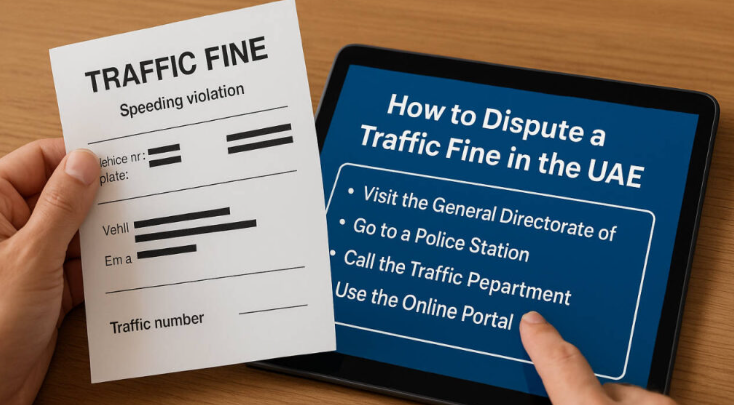
- If you believe it’s incorrect, ask about the dispute process through the proper channel available to you (rental company guidance is key for rentals).
Important mindset: fix the behavior first, then handle the paperwork. The fastest way to turn one fine into three is to keep driving the same way.
Conclusion: Understanding Dubai’s Traffic Fines Means Driving With the System, Not Against It
Understanding Dubai’s Traffic Fines: How They Happen and How to Prevent Them comes down to recognizing that Dubai roads are built for smooth flow and monitored for consistency. Most fines happen in predictable places—interchanges, junctions, monitored lanes—and from predictable behaviors—speed drift, late exits, phone use, and tight following distance. Drive with a small buffer, plan your lane moves early, keep your attention on signs after every interchange, and treat safety rules (seat belts and child restraints) as non-negotiable. With those habits, you’ll spend less time worrying about penalties and more time enjoying how easy Dubai can be to drive.