Introduction
In today’s highly competitive manufacturing environment, speed, precision, and automation define success. A modern production facility cannot rely on manual or outdated labeling processes if it aims to scale efficiently. This is where the vial labeling machine becomes a core component of smart industrial automation.
A high-speed labeling machine is no longer just an optional accessory in production; it is a strategic investment that directly impacts productivity, branding consistency, compliance, and operational cost efficiency. From food and beverage industries to pharmaceuticals, cosmetics, chemicals, and logistics, labeling systems ensure that every product leaving the line meets exact identification standards.
This article explores high-speed labeling machine solutions designed for modern production lines, covering technology types, industrial applications, benefits, selection criteria, and optimization strategies for maximum output performance.
What is a Labeling Machine in Modern Manufacturing?
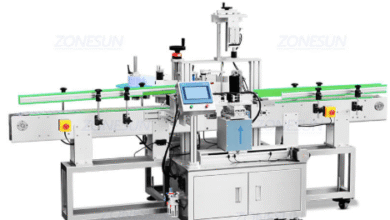
A labeling machine is an automated system used to apply labels to products, containers, bottles, cartons, or packages with precision and consistency. Unlike manual labeling, which is time-consuming and prone to error, automated systems ensure uniform placement, speed, and accuracy across thousands of units per hour.
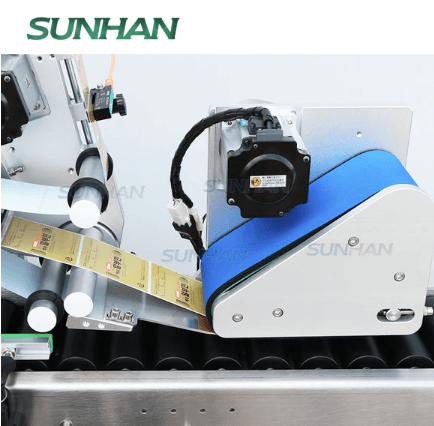
Modern labeling systems integrate sensors, conveyors, servo motors, and programmable logic controllers (PLCs) to maintain synchronization with production lines. These machines can handle various label types such as:
- Pressure-sensitive labels
- Shrink sleeve labels
- Wrap-around labels
- Front and back labels
- Top and bottom labels
The versatility of a labeling machine allows manufacturers to maintain branding consistency while meeting regulatory requirements across global markets.
Importance of High-Speed Labeling Machine Systems
High-speed production environments require equipment that can keep up with continuous output without bottlenecks. A high-performance labeling machine is essential for several reasons:
1. Increased Production Efficiency
A modern labeling system can apply hundreds or thousands of labels per minute, significantly reducing downtime and manual labor dependency.
2. Accuracy and Consistency
Even minor misalignment in labeling can damage brand reputation. Automated systems ensure each label is placed with millimeter precision.
3. Cost Reduction
By reducing human labor and minimizing product rejection due to labeling errors, companies achieve long-term operational savings.
4. Regulatory Compliance
Industries like pharmaceuticals and food processing require strict labeling compliance. Automated systems ensure all required data is accurately applied.
Types of High-Speed Labeling Machine Solutions
Different production lines require different labeling technologies. Below are the most widely used high-speed labeling machine solutions:
1. Automatic Rotary Labeling Machine
This system is designed for ultra-high-speed operations. Containers rotate on a carousel while labels are applied with extreme precision.
Best for: Beverage, pharmaceutical, and cosmetic industries.
2. Inline Labeling Machine
An inline system integrates directly into a conveyor belt line, applying labels as products move continuously.
Best for: Medium to high-volume production lines.
3. Wrap-Around Labeling Machine
This system applies labels around cylindrical containers such as bottles and jars, ensuring full surface coverage.
Best for: Food jars, chemical bottles, and beverage packaging.
4. Front and Back Labeling Machine
These machines apply two labels simultaneously on opposite sides of a product.
Best for: Household products, cleaning solutions, and healthcare packaging.
5. Print-and-Apply Labeling Machine
Combines printing and application in a single step, ideal for variable data such as barcodes and batch numbers.
Best for: Logistics, warehousing, and e-commerce packaging.
Key Features of Modern Labeling Machine Technology
A modern labeling machine integrates advanced engineering and smart automation. Key features include:
Servo Motor Control
Ensures smooth, high-speed operation with minimal vibration and maximum accuracy.
PLC-Based Automation
Allows full control of labeling parameters such as speed, position, and timing.
Smart Sensors
Detect product position and ensure labels are applied only when correctly aligned.
Touchscreen Interface
Operators can easily configure settings, monitor performance, and troubleshoot issues in real time.
High-Speed Conveyor Integration
Synchronizes labeling with upstream and downstream production systems.
Industrial Applications of Labeling Machines
The versatility of labeling machines makes them essential across multiple industries:
Food and Beverage Industry
Used for labeling bottles, jars, cans, and packaged foods with ingredients, expiry dates, and branding information.
Pharmaceutical Industry
Ensures accurate labeling of medicines, dosage instructions, and regulatory compliance data.
Cosmetics Industry
Enhances product branding with high-quality label placement on bottles, tubes, and containers.
Chemical Industry
Applies safety warnings, handling instructions, and hazard symbols.
Logistics and E-commerce
Used for barcode labeling, tracking, and shipment identification.
How High-Speed Labeling Machines Improve Production Lines
A high-speed vial labeling machine transforms traditional production environments into fully automated systems. Key improvements include:
- Eliminating manual bottlenecks
- Increasing throughput capacity
- Reducing labeling errors and waste
- Enhancing traceability and tracking
- Supporting 24/7 continuous production
By integrating labeling automation, companies can scale operations without proportionally increasing labor costs.
Choosing the Right Labeling Machine for Your Business
Selecting the right system depends on multiple factors:
Production Volume
High-volume lines require rotary or fully automated inline systems.
Container Type
Bottle, jar, carton, or irregular shapes determine machine compatibility.
Label Type
Pressure-sensitive, wrap-around, or shrink sleeve labels require different technologies.
Speed Requirements
Machines vary from 50 labels/min to over 500 labels/min depending on configuration.
Budget and ROI
Investing in a high-quality labeling machine ensures long-term savings and production stability.
Maintenance and Optimization Tips
To maximize performance and lifespan of a labeling system:
- Perform regular calibration checks
- Clean sensors and rollers frequently
- Use high-quality label materials
- Train operators for correct setup
- Schedule preventive maintenance
Proper maintenance ensures consistent accuracy and reduces unexpected downtime.
Future of Labeling Machine Technology
The future of labeling machine systems is driven by smart manufacturing and Industry 4.0 technologies. Upcoming advancements include:
- AI-based label detection and correction
- IoT-enabled remote monitoring
- Fully automated self-adjusting systems
- Integration with ERP and production software
- Predictive maintenance using machine learning
These innovations will make labeling systems even faster, smarter, and more energy-efficient.
See also: Mutf_In: Hdfc_Tech_Dir_1en8beo
Conclusion
A high-speed labeling machine is a critical investment for any modern production facility aiming to improve efficiency, accuracy, and scalability. From small manufacturing units to large industrial plants, automation in labeling ensures consistent product presentation and regulatory compliance.
By adopting the right labeling machine technology, businesses can significantly enhance productivity while reducing operational costs. As industries continue to evolve, automated labeling solutions will remain a cornerstone of smart manufacturing systems.
FAQs
1. What is a labeling machine used for?
A labeling machine is used to apply labels on products, containers, or packaging with high speed and precision in industrial production lines.
2. How fast can a high-speed labeling machine operate?
Depending on the model, high-speed systems can label anywhere from 100 to over 500 products per minute.
3. Which industries use labeling machines the most?
Food and beverage, pharmaceuticals, cosmetics, chemicals, and logistics industries heavily rely on labeling machines.
4. What is the difference between manual and automatic labeling machines?
Manual labeling requires human effort and is slower, while automatic labeling machines offer higher speed, accuracy, and consistency.
5. How do I choose the best labeling machine for my production line?
Consider factors like production volume, container type, label format, and automation level before selecting a machine.